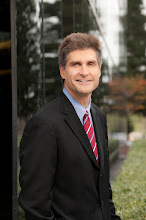
May is a great time to trade in four wheels for two wheels, as we celebrate bike-to-work month.
Before you write me off as one more spandex wearing crazy bicyclist - which i am - consider the following:
* The typical commute length in the Bay Area is five miles or less - perfect for cycling.
* A gallon of gas is now above $4. Pedal power is free.
* Silicon valley enjoys 300-plus sunny days per year, ideal conditions for riding to work.
* A five-mile commute by bike burns off half the calories of that Starbucks drink you just sipped. Make it a round trip, and all those calories are gone.
* The bike path, trail and lane network in Santa Clara County has grown to hundreds of miles, making cycling to work both fun and safe.
And for me, the best reason to cycle to work, I can eat all the chocolate I want.
Join me. Try riding your bike even one day in May. For route information to and from work, contact the great folks at the Silicon Valley Bicycle Coalition. Tell them I sent you. And you don't even have to wear spandex.
Thursday, May 5, 2011

Tuesday, April 26, 2011
Silicon Valley Caucus
First Dates are fun. Relationships are better.
Two weeks ago, The Silicon Valley Leadership Group launched the "Silicon Valley Caucus," an inaugural meeting between our 13 state senators and assemblymen who represent us in the state capitol, with more than 30 Silicon Valley CEOs.
Such is the concern about the success of California that these 30 CEO’s, competing globally, drove all the way to Sacramento for the two-hour meeting.
Like any "first date" the purpose of the initial conversation was to get acquainted, raise the broad challenges that inhibit economic development and job growth in the Golden State, and set the parameters for future dialogue.
We agreed to three more roundtables in 2011, in which we can dive deep on ways that the world’s innovation capital can best assist our representatives in the state capitol. Stay tuned. Only good can come from such collaboration.
Two weeks ago, The Silicon Valley Leadership Group launched the "Silicon Valley Caucus," an inaugural meeting between our 13 state senators and assemblymen who represent us in the state capitol, with more than 30 Silicon Valley CEOs.
Such is the concern about the success of California that these 30 CEO’s, competing globally, drove all the way to Sacramento for the two-hour meeting.
Like any "first date" the purpose of the initial conversation was to get acquainted, raise the broad challenges that inhibit economic development and job growth in the Golden State, and set the parameters for future dialogue.
We agreed to three more roundtables in 2011, in which we can dive deep on ways that the world’s innovation capital can best assist our representatives in the state capitol. Stay tuned. Only good can come from such collaboration.
Thursday, April 14, 2011
U.S. Corporate Tax Rate
Usually, there is excitement when an individual, a team, a company or a country declares "we're number one." Such a chant is often accompanied by a big foam finger elevated up to the sky.
Not so with the United States. When it comes to the world's highest corporate tax rate, America is now "number one," a dubious distinction that leaves American companies - and therefore American workers - uncompetitive abroad.
The U.S. corporate tax rate, adding in California's additional rate, is 39.4 percent. Competitor nations average in the low 20's.
Adding insult to injury, America is the only country in the world that double-taxes the profits American companies make while competing abroad. We pay the corporate rate in the country in which we do business, and then pay the U.S. rate that is left over if our company's ever try to bring those earnings back to America's shores. This broken system has trapped more than $1 trillion off-shore, unable to make it back home to stimulate the American economy.
Let's get it right. Congress and the President should be fighting to make American employers more competitive globally, not less so. Overhaul America's corporate tax code; incent companies to repatriate dollars earned overseas; grow America's economy. For more details, visit "winamericacampaign.org".
Not so with the United States. When it comes to the world's highest corporate tax rate, America is now "number one," a dubious distinction that leaves American companies - and therefore American workers - uncompetitive abroad.
The U.S. corporate tax rate, adding in California's additional rate, is 39.4 percent. Competitor nations average in the low 20's.
Adding insult to injury, America is the only country in the world that double-taxes the profits American companies make while competing abroad. We pay the corporate rate in the country in which we do business, and then pay the U.S. rate that is left over if our company's ever try to bring those earnings back to America's shores. This broken system has trapped more than $1 trillion off-shore, unable to make it back home to stimulate the American economy.
Let's get it right. Congress and the President should be fighting to make American employers more competitive globally, not less so. Overhaul America's corporate tax code; incent companies to repatriate dollars earned overseas; grow America's economy. For more details, visit "winamericacampaign.org".
Tuesday, April 5, 2011
Caltrain Town Halls
Launched during the Civil War, Caltrain commuter rail service has been a key component for commuters for 150 years.
In spite of strong ridership, this well-run rail line risks insolvency as it lacks a dedicated revenue stream, which almost every transit system in America enjoys.
Significant cuts are currently being proposed, with one option slashing service from 86 daily trains to just 48. With some hard work and creativity, we are hoping to minimize those cuts in the short term and add service in the long term.
To keep Caltrain strong, we need your feedback participation. Over the next six weeks, the Silicon Valley Leadership Group will host eight "town hall" meetings up & down the 79-mile Caltrain corridor.
We kick-off in Mountain View on April 11, with future town halls in Morgan Hill San Jose, Santa Clara and Palo Alto. Visit http://svlg.org/campaigns/savecaltrain/ for dates, times and details.
Caltrain serves 41,000 daily trips. We cannot afford to place those commuters back on the already congested 101 corridor. Let's work together to ensure service cuts are minimized, and find creative ways to strengthen the system for the next 150 years.
In spite of strong ridership, this well-run rail line risks insolvency as it lacks a dedicated revenue stream, which almost every transit system in America enjoys.
Significant cuts are currently being proposed, with one option slashing service from 86 daily trains to just 48. With some hard work and creativity, we are hoping to minimize those cuts in the short term and add service in the long term.
To keep Caltrain strong, we need your feedback participation. Over the next six weeks, the Silicon Valley Leadership Group will host eight "town hall" meetings up & down the 79-mile Caltrain corridor.
We kick-off in Mountain View on April 11, with future town halls in Morgan Hill San Jose, Santa Clara and Palo Alto. Visit http://svlg.org/campaigns/savecaltrain/ for dates, times and details.
Caltrain serves 41,000 daily trips. We cannot afford to place those commuters back on the already congested 101 corridor. Let's work together to ensure service cuts are minimized, and find creative ways to strengthen the system for the next 150 years.
Tuesday, March 29, 2011
U.S. Patent Office in Silicon Valley
The U.S. Patent Office is working to reduce the patent approval process from an average of three years to a more competitive 18 months.
Kudos to Commerce Secretary Gary Locke and Patent Office Director David Kappos - a former IBM Executive - for streamlining a notoriously bureaucratic process.
In Silicon Valley, we know that three years equates to about four product cycles, slowing down innovation and job creation. It’s time for step two - a regional patent office in Silicon Valley. A regional office was recently approved - not for the world’s Capitol of Innovation - but for Detroit, Michigan.
Really.
Legislation is under consideration for three more regional offices. Silicon Valley is a natural. On April 14, the Silicon Valley Leadership Group and Joint Venture: Silicon Valley will host Mr. Kappos to rally support for a regional office, right here in Silicon Valley. Let’s break down barriers to innovation, rather than erect them. To join us, visit SVLG.org.
Kudos to Commerce Secretary Gary Locke and Patent Office Director David Kappos - a former IBM Executive - for streamlining a notoriously bureaucratic process.
In Silicon Valley, we know that three years equates to about four product cycles, slowing down innovation and job creation. It’s time for step two - a regional patent office in Silicon Valley. A regional office was recently approved - not for the world’s Capitol of Innovation - but for Detroit, Michigan.
Really.
Legislation is under consideration for three more regional offices. Silicon Valley is a natural. On April 14, the Silicon Valley Leadership Group and Joint Venture: Silicon Valley will host Mr. Kappos to rally support for a regional office, right here in Silicon Valley. Let’s break down barriers to innovation, rather than erect them. To join us, visit SVLG.org.
Wednesday, March 23, 2011
San Jose City Councilman Sam Liccardo
Two public sector labor unions took to the pages of the San Jose Mercury News for a 600-word op/ed personally attacking San Jose City Councilmember Sam Liccardo about recent concerns he raised on budget and pension reforms currently under consideration.
Councilman Liccardo praised the progress of discussions with the firefighters union, but fears it's not enough to adequately address the budget shortfall.
One can agree or disagree with his assessment, but that debate should focus on dollars and cents, not demonizing the messenger with personal attacks and character assaults. In 600 words, the two union leaders didn't deny Liccardo's logic. Instead, they cast aspersions on his motives.
Let's back-up. We're best served when we attack issues - rather than the individuals or institutions who raise them.
Councilman Liccardo praised the progress of discussions with the firefighters union, but fears it's not enough to adequately address the budget shortfall.
One can agree or disagree with his assessment, but that debate should focus on dollars and cents, not demonizing the messenger with personal attacks and character assaults. In 600 words, the two union leaders didn't deny Liccardo's logic. Instead, they cast aspersions on his motives.
Let's back-up. We're best served when we attack issues - rather than the individuals or institutions who raise them.
Wednesday, March 9, 2011
California State Budget
As Mick Jagger of the Rolling Stones reminds us, “You can’t always get what you want – but you can get what you need.”
That is the tune Governor Jerry Brown is singing to both Democrat and Republican state legislators, as he tries to close a 26 billion dollar hole in our state budget.
• Painful cuts
• Temporary tax extensions
On March 8, SunPower CEO Tom Werner – chair of the Silicon Valley Leadership Group Board of Directors, along with board member Tim Guertin, CEO of Varian, accompanied me to Sacramento for an hour-long dialogue with the Governor on his budget. We also had an in-depth discussion on the need for:
• A California jobs & economic plan,
• Meaningful budget & governance reforms
• Pension reform
• Regulatory reform
We urge legislators to find common ground, both on the budget and these important issues. This budget has items everyone can hate & everyone can love. Done right – legislators may not get everything they want, but Californians will get what we need: a balanced budget and a path forward.
That is the tune Governor Jerry Brown is singing to both Democrat and Republican state legislators, as he tries to close a 26 billion dollar hole in our state budget.
• Painful cuts
• Temporary tax extensions
On March 8, SunPower CEO Tom Werner – chair of the Silicon Valley Leadership Group Board of Directors, along with board member Tim Guertin, CEO of Varian, accompanied me to Sacramento for an hour-long dialogue with the Governor on his budget. We also had an in-depth discussion on the need for:
• A California jobs & economic plan,
• Meaningful budget & governance reforms
• Pension reform
• Regulatory reform
We urge legislators to find common ground, both on the budget and these important issues. This budget has items everyone can hate & everyone can love. Done right – legislators may not get everything they want, but Californians will get what we need: a balanced budget and a path forward.
Subscribe to:
Posts (Atom)